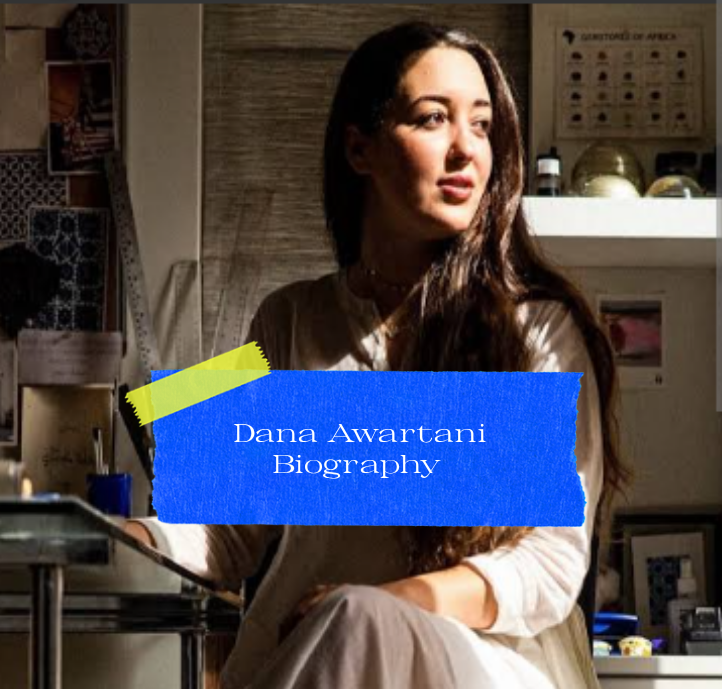
Dana Awartani stands out as a key figure in today’s art world. She blends old traditions with new ideas. Born in 1987, this Saudi-Palestinian artist uses her work to explore deep topics like culture, memory, and healing. Her art often draws from Islamic geometry, a style that mixes math, art, and spirit. This makes her pieces both beautiful and thoughtful.
Awartani lives and works between Jeddah, Saudi Arabia, and New York, United States. She creates in many forms, such as paintings, sculptures, installations, and performances. Her focus on craft traditions helps keep Arab heritage alive. For example, she uses sand, clay, and textiles to tell stories of loss and repair. In 2024, her work at the Venice Biennale caught global attention. It showed torn silk fabrics dyed with healing herbs, a nod to destroyed sites in Gaza. This piece, called “Come, let me heal your wounds. Let me mend your broken bones,” spoke to themes of cultural destruction and hope.
Her art educates viewers on the value of history. It also pushes for saving endangered crafts. Awartani’s multicultural roots shape her views. She has Palestinian, Saudi, and hints of Syrian and Jordanian heritage. This mix helps her connect East and West in her creations. As she prepares for the Saudi Pavilion at the 2026 Venice Biennale, her influence grows. This role marks her as a voice for Arab artists on the world stage.
Through her work, Awartani reminds us that art can heal and preserve. It can bridge gaps between past and present. Readers will find her story inspiring. It shows how one person can honor traditions while speaking to today’s issues. This profile covers her life from start to now, with facts from trusted sources. It aims to make her journey easy to follow and understand.
Dana Awartani Early Life and Background
Dana Awartani was born in 1987 in Jeddah, Saudi Arabia. Jeddah is a busy port city known for its rich history and mix of cultures. She grew up there, surrounded by the sights and sounds of the Red Sea coast. This place shaped her early views on art and life.
Her family roots run deep in diversity. She has Saudi and Palestinian heritage. Some sources also note Syrian and Jordanian ties. This blend gave her a broad outlook. From a young age, her family encouraged a love for arts. They saw her talent and supported her path. Living in Jeddah, she saw old buildings and markets. These sparked her interest in heritage.
As a child, Awartani felt a pull toward cultural stories. The historic Al-Balad area in Jeddah inspired her. It has traditional homes with detailed designs. This early exposure to Arab architecture and crafts set the stage for her future work. She often speaks of feeling disconnected from Western art teachings in school. Instead, she sought roots in Middle Eastern traditions.
Her Palestinian side adds layers to her identity. It brings themes of exile and memory into her art. Poets like Mahmoud Darwish influence her, as seen in works titled after his lines. Growing up in Saudi Arabia, she balanced local customs with global ideas. This mix helped her become an artist who bridges worlds.
Today, her background fuels her focus on cultural preservation. It shows in how she uses local materials and old techniques. Her early life in Jeddah built a strong base for her creative voice.
Dana Awartani Education
Dana Awartani’s learning path focused on art from the start. In 2006, she earned a Foundation Degree in Art and Design from Byam Shaw School of Art, part of Central Saint Martins in London. This step introduced her to basic skills in drawing and design.
By 2009, she completed a Bachelor’s Degree in Fine Art at Central Saint Martins, London. There, she learned to think deeply about art concepts. But she wanted more hands-on craft knowledge. She felt Western education missed Eastern traditions.
In 2011, Awartani gained a Master’s Degree in Traditional Arts from The Prince’s School of Traditional Arts, now called The King’s Foundation School of Traditional Arts, in London. This program taught her sacred geometry, illumination, and pigment making. It bridged her interest in Islamic art with modern methods.
In 2012, she did an apprenticeship in Manuscript Illumination in Istanbul, Turkey. This hands-on training with masters honed her skills in old techniques. She aimed for the Ijaza, a top award in Islamic illumination.
Her education mixed theory and practice. It helped her create art that honors the past while speaking to now. This foundation supports her unique style today.
Dana Awartani Career
Dana Awartani’s career spans many mediums and themes. She started showing work soon after her studies. Her art often uses geometry as a core element. It stands for harmony and spirit in Islamic traditions.
In 2013, she joined the Venice Biennale for the first time. This boosted her global profile. By 2015, she had her first solo show at Athr Gallery in Jeddah. Titled “The Hidden Qualities of Quantities,” it explored numbers and shapes.
Her work grew bolder. In 2016, she featured in the Kochi-Muziris Biennale in India. There, “Love is my Law Love is my Faith” drew from Sufi poems. That year, she also showed at Yinchuan Biennale in China.
In 2017, Awartani held a solo at the Museum of Contemporary Art Detroit. Her piece “I Went Away and Forgot You. A While Ago I Remembered. I Remembered I’d Forgotten You. I Was Dreaming” used sand mosaic and video. It showed her sweeping away a design in an old Jeddah home. This work touched on memory and loss.
By 2018, she exhibited at Maraya Art Centre in Sharjah. “The Silence Between Us” included screens and poems. It delved into light and shadow.
In 2019, she started the series “Come, let me heal your wounds. Let me mend your broken bones, as we stand here mourning.” It used darning on silk dyed with herbs. This addressed healing and destruction.
The 2020s brought more acclaim. In 2021, “Standing by the Ruins of Aleppo” at Diriyah Biennale recreated a mosque floor destroyed in 2013. It used 439 adobe bricks.
In 2022, she joined Desert X AlUla. “Where the Dwellers Lay” highlighted old craft. That year, shows at Lyon Biennale and Hirshhorn Museum followed.
In 2023, Sharjah Biennale 15 featured her. “When the Dust of Conflict Settles” looked at war’s aftermath.
2024 saw solos at Samstag Museum in Australia and Venice Biennale. Her Venice piece mourned Gaza’s Hamam al-Sammara, destroyed in war.
In 2025, exhibitions at Arnolfini in Bristol and Towner Eastbourne continued her themes. “Standing by the Ruins III” used local crafts to rebuild lost designs.
Her career peaks with the 2026 Venice Biennale Saudi Pavilion. Awartani’s art preserves crafts like tile-making and dyeing. It tackles gender, sustainability, and cultural erasure. Collections include British Museum, Guggenheim, and Hirshhorn.
She works with galleries like Lisson and Sfeir-Semler. Her Instagram shares studio life. Awartani inspires by linking old wisdom to modern stories.
Dana Awartani Awards
Dana Awartani has earned praise for her work. Here is a list of key honors:
- In 2024, she was shortlisted for the Dia Al-Azzawi Prize for Public Art. This award spots art that changes communities in the Arab world.
- Also in 2024, shortlisted for the High Line Plinth Commission in New York. It picks artists for public sculptures.
- In 2022, shortlisted for the Richard Mille Art Prize at Louvre Abu Dhabi. This honors fresh art ideas.
- In 2021, she received the National Cultural Award from Saudi Arabia’s Ministry of Culture. It celebrates her role in preserving heritage.
- In 2020, won the Instituto Sacatar Residency Award from Sesc_Videobrasil. This gave her time to create in Brazil.
These awards show her growing impact. They highlight her skill in blending craft and current issues.
Dana Awartani Personal Life
Dana Awartani keeps her private life quiet. She was born in 1987 and raised in Jeddah, Saudi Arabia. Now, she splits time between Jeddah and New York. This setup lets her draw from both places.
Her family background includes Saudi and Palestinian roots. She credits them for sparking her art love early on. No public details on a spouse or children exist. She focuses on her work and cultural ties.
In interviews, she shares her studio routine. She often works with local artisans. Travel for research shapes her ideas. For instance, she learned dyeing in India.
Conclusion
Dana Awartani’s journey inspires many. From her Jeddah roots to global shows, she has built a strong voice in art. Her focus on Islamic geometry and craft keeps traditions alive. Works like “Standing by the Ruins” remind us of lost heritage. They push for protection in a changing world.
Her impact reaches far. She elevates Arab stories on stages like Venice Biennale. Young artists see her as a model for blending old and new. Awards and exhibitions prove her skill.
Looking ahead, her 2026 pavilion will shine more light on her themes. Awartani shows art can heal and unite. Her legacy grows as she creates.
FAQs
Who is Dana Awartani?
Dana Awartani is a Saudi-Palestinian artist born in 1987. She creates works that mix traditional Islamic art with modern ideas. Her art covers themes like cultural loss and healing.
Where is Dana Awartani from?
She was born and raised in Jeddah, Saudi Arabia. She has Palestinian heritage and now lives between Jeddah and New York.
What is Dana Awartani known for?
Awartani is known for using Islamic geometry in her art. Her notable works include sand mosaics and textile darned pieces that address destruction and repair.
What education does Dana Awartani have?
She holds a BA in Fine Art from Central Saint Martins, London (2009). She also has an MA in Traditional Arts from The King’s Foundation School of Traditional Arts, London (2011).
What are some of Dana Awartani’s major exhibitions?
She has shown at Venice Biennale (2024), Sharjah Biennale (2023), and Desert X AlUla (2022). She will represent Saudi Arabia at Venice Biennale in 2026.
Has Dana Awartani won any awards?
Yes, she received the National Cultural Award from Saudi Arabia in 2021. She was shortlisted for the Richard Mille Art Prize in 2022 and others.
What themes does Dana Awartani explore in her art?
Her art explores cultural erasure, healing, sustainability, and gender. She uses crafts to highlight these issues.
Where does Dana Awartani live now?
She lives and works between Jeddah, Saudi Arabia, and New York, United States.
Why is Dana Awartani important in contemporary art?
She bridges traditional Arab crafts with modern topics. Her work preserves heritage and inspires global audiences.
What are Dana Awartani’s notable works?
Key pieces include “Standing by the Ruins” series (2021-2025) and “Come, let me heal your wounds…” (2019-2024). They use local materials to discuss loss.