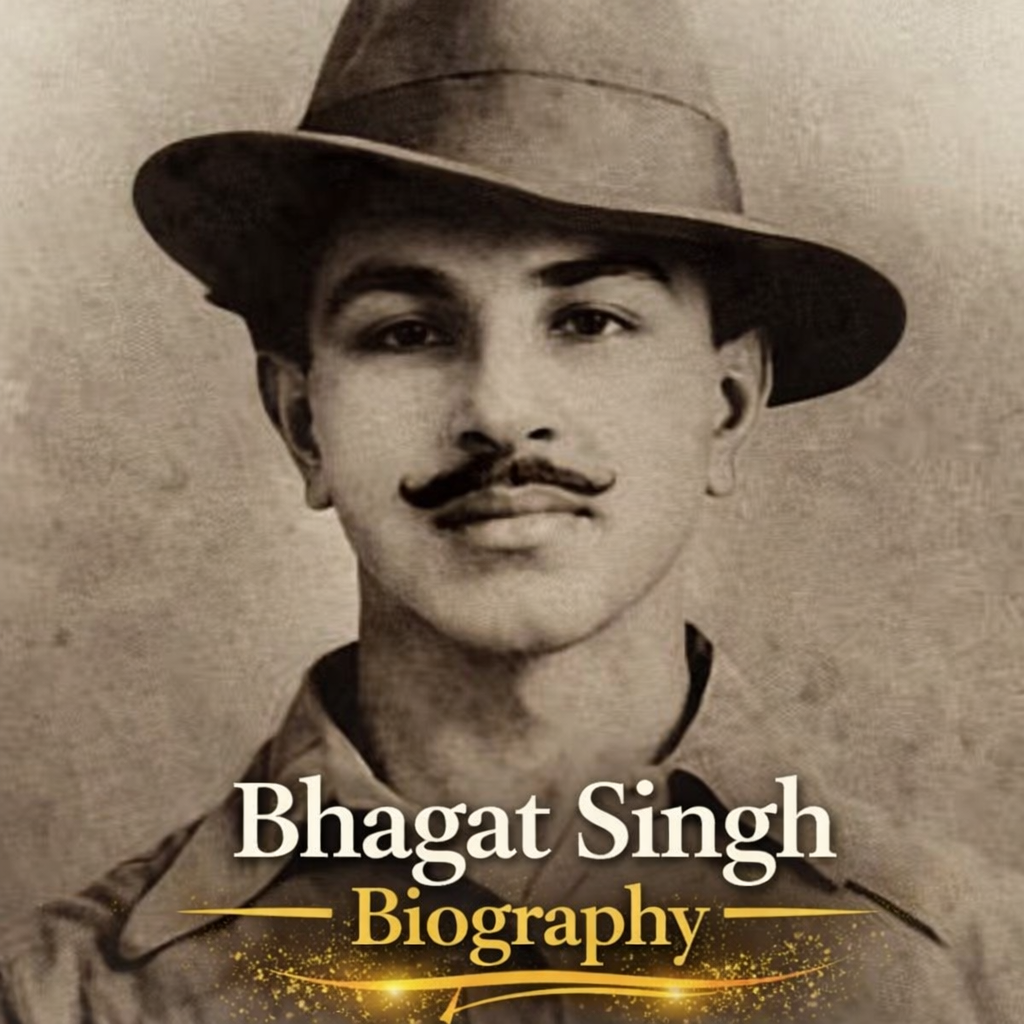
Who Is Bhagat Singh?
Bhagat Singh was an Indian revolutionary freedom fighter who played a crucial role in the struggle against British colonial rule. Known for his fearless approach and strong ideological beliefs, he became one of the most influential figures in India’s independence movement. His actions, writings, and sacrifices established him as a symbol of courage, patriotism, and youth activism.
He achieved major recognition through his involvement in revolutionary activities such as the assassination of British officer J.P. Saunders and the bombing of the Central Legislative Assembly in 1929 as a form of protest. These acts brought widespread attention to the cause of Indian independence and made him a national hero.
Bhagat Singh is currently trending due to the observance of Shaheed Diwas (March 23, 2026) and recent efforts to honor his legacy, including memorials and renewed public discussions about his ideology. A key highlight of his life and career is his martyrdom at the age of 23, which transformed him into an enduring symbol of sacrifice and resistance in Indian history.
Bhagat Singh Early Life and Background
Bhagat Singh was born on September 27, 1907, in Banga, Punjab (now in Pakistan).
He was born into a Sikh family deeply involved in the Indian independence movement, which had a strong influence on his upbringing.
His father, Kishan Singh, and other family members were active in anti-British activities, exposing him to revolutionary ideas from an early age.
During his childhood, Bhagat Singh grew up in an environment filled with political discussions, resistance movements, and patriotic ideals.
One of the most defining moments of his early life was the Jallianwala Bagh massacre of 1919, which deeply impacted him and strengthened his resolve to fight against British rule.
As a young boy, he is said to have visited the site of the massacre and collected soil stained with the blood of victims, showing his emotional connection to the cause.
From an early age, he developed a strong interest in freedom, justice, and revolutionary thought.
He was also passionate about reading and learning, especially about political movements and global revolutions, which helped shape his ideology and future actions.
Bhagat Singh Education
Bhagat Singh received his early education at the Dayanand Anglo-Vedic (DAV) School in Lahore, where he was introduced to both academic learning and nationalist ideas.
He later enrolled at the National College in Lahore, an institution founded by Lala Lajpat Rai to promote patriotic education free from British control.
At National College, he studied subjects such as history, politics, and literature, which played a significant role in shaping his revolutionary mindset.
He did not pursue formal degrees in the conventional sense, as his focus gradually shifted toward the independence movement and political activism.
Bhagat Singh was largely self-educated, spending a significant amount of time reading books on revolutionary movements, socialism, and political theory.
He was influenced by global thinkers and revolutionaries, which helped him develop a clear ideological framework.
In terms of special training, he gained practical experience through involvement in revolutionary groups, where he learned organizational skills, underground operations, and political strategy.
His early preparation for his role in the freedom struggle came through a combination of formal education, self-study, and active participation in nationalist movements, which equipped him with both intellectual depth and practical experience.
Bhagat Singh Career
Bhagat Singh began his journey as a revolutionary at a young age, driven by his deep anger against British colonial rule and his desire for India’s independence.
He entered the movement by joining youth organizations and later became actively involved with the Hindustan Socialist Republican Association (HSRA), a revolutionary group that aimed to overthrow British authority through direct action.
In the early stages of his career, he focused on spreading revolutionary ideas, writing articles, and participating in protests to awaken political consciousness among the youth.
His activities soon moved from ideological work to direct action.
One of his first major milestones was his involvement in the assassination of British officer J.P. Saunders in 1928, carried out as an act of revenge for the death of Indian leader Lala Lajpat Rai, who had been injured during a protest against British policies.
This event brought Bhagat Singh into national attention and marked a turning point in his revolutionary career.
In 1929, he, along with Batukeshwar Dutt, carried out a bombing in the Central Legislative Assembly in Delhi.
The bombs were intentionally non-lethal and were used to protest against oppressive laws and to “make the deaf hear.”
After the bombing, he deliberately surrendered to the authorities to use the trial as a platform to spread his message.
During his imprisonment, Bhagat Singh gained further recognition for his hunger strike, protesting against the treatment of Indian political prisoners.
His actions during this period turned him into a symbol of resistance and sacrifice.
His revolutionary career came to an end when he was executed on March 23, 1931, at the age of 23.
However, his ideas, courage, and sacrifice made him one of the most influential figures in India’s freedom struggle.
His career progression reflects a shift from student activism to revolutionary leadership, leaving a lasting impact on the independence movement.
Bhagat Singh Shaheed Diwas National Event
Shaheed Diwas, also known as Martyrs’ Day, is a significant national event in India observed every year on March 23.
This day commemorates the sacrifice of three legendary freedom fighters—Bhagat Singh, Shivaram Rajguru, and Sukhdev Thapar—who were executed by the British in 1931 for their role in the independence movement.
The event holds deep emotional and historical importance, as it honors the courage, patriotism, and sacrifice of those who gave their lives for India’s freedom.
Shaheed Diwas is observed across India with various official and public commemorations.
Government leaders pay tribute to the martyrs by offering flowers at memorials and sharing messages that highlight their legacy.
Ceremonies are held at important locations such as the Hussainiwala National Martyrs Memorial in Punjab, as well as in schools, colleges, and public institutions.
Educational and cultural activities are organized, including speeches, debates, essay competitions, patriotic performances, and documentary screenings about the freedom struggle.
Students and young people actively participate in these events, helping to preserve the memory of the martyrs.
The day also gains widespread attention on social media, where people share quotes, stories, and tribute messages honoring the revolutionaries.
Shaheed Diwas remains a powerful reminder of the values of courage, sacrifice, justice, and patriotism, continuing to inspire generations.
Bhagat Singh Personal Life
Bhagat Singh chose to dedicate his entire life to the cause of India’s independence and therefore never married.
There is no record of a spouse or partner, as he consciously decided to avoid personal attachments in order to fully commit to the revolutionary movement.
He did not have any children.
His lifestyle was simple and disciplined, focused entirely on revolutionary activities, intellectual growth, and national service.
He spent much of his time reading, writing, and engaging in discussions about politics, freedom, and social change.
Bhagat Singh had a deep interest in books, philosophy, and global revolutionary movements, and he was known to study the works of thinkers related to socialism and political theory.
He also enjoyed writing articles and essays, using his words to spread awareness and inspire others.
In terms of personality, he was known for being courageous, intelligent, disciplined, and highly principled.
He was also deeply thoughtful and philosophical, as seen in his writings such as Why I Am an Atheist.
His calm determination and fearless attitude in the face of danger made him a powerful symbol of resistance and sacrifice.
Legacy
Bhagat Singh is remembered for his contributions to India’s independence movement and revolutionary thought. His work continues to influence many people and remains an important part of the country’s history and national identity.
Through his courage, sacrifice, and strong ideological beliefs, he became a lasting symbol of patriotism, youth activism, and resistance against oppression.
His actions inspired countless individuals to join the freedom struggle and continue to motivate generations to stand up for justice and equality.
Through dedication and perseverance, he built a legacy that continues to inspire future generations.
Frequently Asked Questions About Bhagat Singh
1. Who is Bhagat Singh?
Bhagat Singh was an Indian revolutionary freedom fighter who played a major role in the struggle against British colonial rule.
2. When was Bhagat Singh born?
He was born on September 27, 1907.
3. Where was Bhagat Singh born?
He was born in Banga, Punjab (now in Pakistan).
4. What is Bhagat Singh known for?
He is known for his revolutionary actions against British rule, including the assassination of J.P. Saunders and the Central Legislative Assembly bombing.
5. Why is Bhagat Singh considered a hero?
He is considered a hero because of his courage, sacrifice, and dedication to India’s independence.
6. Did Bhagat Singh get married?
No, he never married and dedicated his life to the freedom struggle.
7. How did Bhagat Singh die?
He was executed by the British on March 23, 1931.
8. How old was Bhagat Singh when he died?
He was 23 years old at the time of his execution.
9. What were Bhagat Singh’s beliefs?
He believed in revolution, justice, and equality, and was influenced by socialist and anti-colonial ideologies.
10. Why is Bhagat Singh still remembered today?
He is remembered as a symbol of patriotism, bravery, and youth activism in India.
Read more:
- Ken Karunas Biography: Age, Career, Net Worth, Family, Youth Movie, and Personal Life
- Thandeka Tshabalala Biography: Age, Birthday, Career, Net Worth, Big Brother Mzansi Runner-Up, and Personal Life