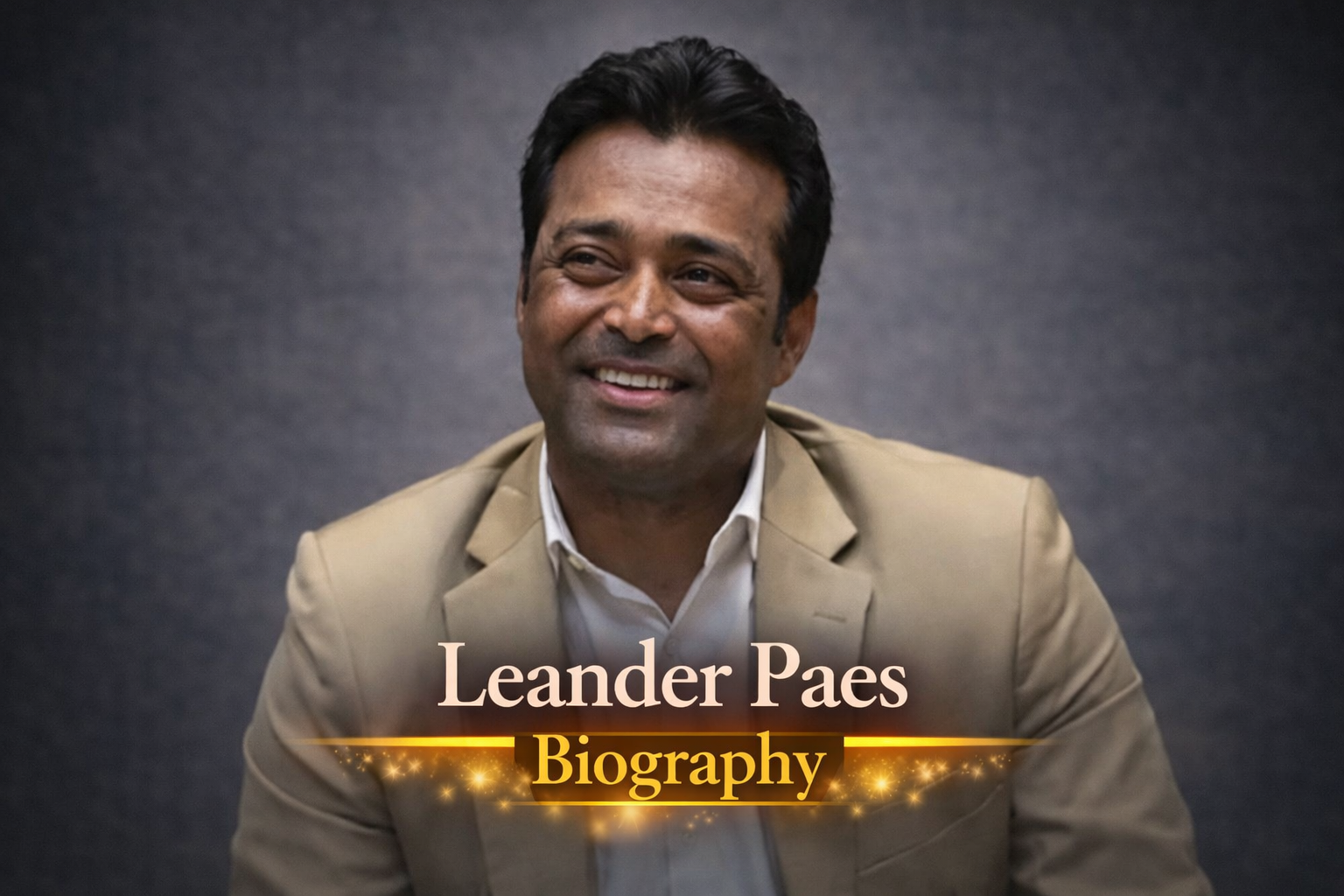
Who Is Leander Paes?
Leander Adrian Paes is an Indian former professional tennis player, widely regarded as one of the greatest doubles players in the history of the sport. Born on June 17, 1973, in Kolkata, India, he built an extraordinary career spanning nearly three decades, achieving global recognition through his dominance in doubles and mixed doubles tennis. He is an Olympic bronze medalist and an 18-time Grand Slam champion, making him one of India’s most decorated athletes.
He is currently trending in 2026 following his entry into Indian politics after joining the Bharatiya Janata Party (BJP), marking a major transition from sports to public service. This move has sparked widespread discussion across both sports and political circles. A key highlight of his career remains his 1996 Atlanta Olympics bronze medal, which made him the first Indian in decades to win an individual Olympic medal and cemented his legacy as a national sporting icon.
Leander Paes Early Life and Background
Leander Adrian Paes was born on June 17, 1973, in Kolkata (formerly Calcutta), West Bengal, India, into a family deeply rooted in sports. As of 2026, he is 52 years old, and his early life was strongly influenced by athletic excellence and discipline.
He is the son of Vece Paes, an Indian Olympic hockey player who won a bronze medal at the 1972 Munich Olympics, and Jennifer Paes, who captained the Indian national basketball team. Growing up in such a highly accomplished sporting family, Leander was naturally exposed to competitive sports from a very young age.
Initially, he showed interest in football, but due to injuries, his focus gradually shifted toward tennis. Recognizing his talent and potential, he was enrolled at the Britannia Amritraj Tennis Academy in 1985, where he received professional training under experienced coaches.
His upbringing was filled with discipline, structured training, and a strong sense of national pride, which later became evident in his performances on the international stage. From an early age, he displayed determination, resilience, and a fighting spirit—qualities that would go on to define his legendary tennis career.
Overall, Leander Paes’s early life reflects a powerful blend of sports heritage, early exposure to professional training, and relentless ambition, laying the foundation for one of the most successful careers in Indian tennis history.
Leander Paes Education Background and Academic Details
Leander Adrian Paes’s educational journey reflects a balance between formal schooling and intensive sports training, as his early life was heavily focused on developing his tennis career.
He completed part of his schooling at La Martiniere Calcutta, one of the most prestigious schools in Kolkata, where he began nurturing his academic and athletic interests. He later attended Madras Christian College Higher Secondary School in Chennai, a move that aligned with his growing commitment to professional tennis training.
In addition, he had an association with St. Xavier’s College, although his academic path was largely shaped by his dedication to sports rather than conventional higher education routes.
A significant part of his education came through professional tennis training at the Britannia Amritraj Tennis Academy, where he joined in 1985. Under the guidance of experienced coaches, he developed the technical skills, discipline, and competitive mindset required to succeed at the international level.
Unlike traditional academic paths, Leander Paes’s education was deeply intertwined with sport, combining classroom learning with rigorous athletic training. This unique blend played a crucial role in shaping his career, equipping him with the resilience, focus, and strategic thinking that defined his success on the global tennis stage.
Leander Paes Career
Leander Adrian Paes began his professional tennis career in 1991, quickly establishing himself as one of India’s most promising young talents. His early years were marked by strong performances in junior tournaments, including winning the Wimbledon Junior title in 1990, which signaled his potential on the global stage.
In the early 1990s, he became a key member of the Indian Davis Cup team, where he gained recognition for his fighting spirit and ability to perform under pressure. His singles performances brought him early attention, but he gradually found his true strength in doubles tennis, where his reflexes, net play, and teamwork stood out.
His major breakthrough came in 1996, when he won the bronze medal at the Atlanta Olympics, becoming the first Indian in over four decades to win an individual Olympic medal. This achievement elevated him to national hero status and marked a turning point in his career.
Major Achievements
• Won 18 Grand Slam titles (8 men’s doubles and 10 mixed doubles)
• Achieved World No.1 ranking in doubles (1999)
• Won French Open and Wimbledon doubles titles (1999)
• Completed a Career Grand Slam in both men’s doubles and mixed doubles
• Competed in 7 Olympic Games (1992–2016)
• Holds records in Davis Cup, including most doubles wins
Leander Paes formed one of the most successful partnerships in tennis history with Mahesh Bhupathi, with the duo reaching multiple Grand Slam finals and winning major titles. Over the years, he also partnered with several international players, continuing to win Grand Slam titles well into his late 30s and 40s—an exceptional feat in professional tennis.
He became known for his longevity, adaptability, and unmatched doubles expertise, maintaining a high level of performance across different eras of the sport.
Leander Paes officially retired from professional tennis in 2020. As of 2025–2026, he is active as a sports mentor, ambassador, and public figure, and has recently entered Indian politics by joining the Bharatiya Janata Party (BJP).
He is widely regarded as one of the greatest doubles players in tennis history and one of India’s most influential athletes.
Leander Paes’s career is a remarkable story of excellence, resilience, and longevity. From winning Olympic glory to dominating Grand Slam doubles tennis, his journey reflects sustained success and a lasting impact on Indian and global tennis.
Leander Paes Entry into Politics (2026 Political Transition)
In 2026, Leander Adrian Paes made a significant shift in his career by formally entering Indian politics, joining the Bharatiya Janata Party (BJP). This move marked a new chapter in his life, transitioning from a legendary sports career to public service and national leadership.
His decision to join politics was driven by his expressed desire to serve the country beyond sports, particularly focusing on youth development, sports infrastructure, and national growth. Drawing from his decades of international experience, he emphasized the importance of discipline, dedication, and nation-building—values he believes can contribute meaningfully to governance.
The announcement of his political entry generated widespread attention across India, with reactions ranging from support and admiration to cautious curiosity. Many in the sports community welcomed his move, seeing it as an opportunity for a seasoned athlete to influence policy, especially in areas related to sports and youth empowerment.
However, his entry also sparked mixed reactions, with some critics questioning the shift from sports to politics and others adopting a “wait and see” approach regarding his role and impact in the political space.
Despite differing opinions, his move reflects a growing trend of prominent public figures entering politics to leverage their influence for broader societal impact. For Leander Paes, this transition represents an effort to extend his legacy beyond tennis and contribute to the development of the nation on a larger scale.
Leander Paes Personal Life, Wife and Family
Leander Adrian Paes has led a public yet deeply personal life, often balancing the demands of an international tennis career with his responsibilities as a father and public figure. Despite his global fame, many aspects of his personal life have remained grounded and centered around family.
He was in a long-term relationship with Rhea Pillai, a well-known Indian model and actress. The relationship, which lasted from around 2000 to 2015, was widely covered in the media. The couple has a daughter together, Aiyana Paes, who has been an important part of his life.
As a father, Leander has often expressed his deep emotional connection with his daughter, and fatherhood has played a significant role in shaping his identity beyond tennis. His personal journey has also included public legal disputes related to his past relationship, which brought attention to his private life at various points.
Outside of family, his lifestyle is strongly centered on fitness, discipline, and sports culture. Even after retirement, he continues to maintain a physically active routine and remains closely connected to tennis through mentoring and public engagements.
In terms of personality, he is widely known for his passion, energy, and resilience, traits that have defined both his professional success and personal journey. He is also seen as someone who carries a strong sense of national pride and commitment to representing India on global platforms.
Overall, Leander Paes’s personal life reflects a blend of public visibility, personal challenges, and strong family values, all of which have contributed to shaping his identity as both a sports icon and an individual.
Leander Paes Age, Religion, Height and Physical Appearance
Leander Adrian Paes was born on June 17, 1973, making him 52 years old as of 2026. He is an Indian national and belongs to a Goan Catholic (Indian Christian) ethnic background, reflecting his family roots.
He follows Christianity, which aligns with his family’s religious background, although he maintains a relatively private approach to personal beliefs.
In terms of physical appearance, Leander Paes stands at approximately 5 feet 10 inches (178 cm). He has an athletic and well-maintained physique, which he has sustained even after retiring from professional tennis, reflecting his lifelong commitment to fitness and discipline.
He is known for his energetic presence, sharp facial features, and expressive personality, often displaying high energy both on and off the court. His style is typically sporty and casual, though he also appears in formal attire during public events and official engagements.
His overall appearance and personality project confidence, agility, and charisma, qualities that contributed significantly to his success as a tennis player and continue to shape his public image as a respected sports icon and emerging political figure.
Leander Paes Social Media Presence
Leander Adrian Paes maintains an active and engaging presence on social media, where he connects with fans, shares his journey, and promotes fitness, sports, and national pride.
He is active on platforms such as:
• Instagram: @leanderpaes
• X (Twitter): @Leander
• Facebook: Leander Paes
On these platforms, he shares a mix of tennis memories, motivational content, fitness routines, event appearances, and personal moments, including time with his daughter and insights into his post-retirement life.
His content also reflects his transition into mentorship and public service, with increasing posts related to youth development, sports initiatives, and recently, his entry into politics in 2026.
Leander enjoys a large global following, built over decades of international success. His engagement levels are strong, especially among sports fans, aspiring athletes, and Indian audiences who admire his legacy.
He also collaborates with brands and participates in campaigns related to fitness, sports development, and national initiatives, further strengthening his influence beyond tennis.
Overall, Leander Paes’s social media presence plays a key role in maintaining his relevance, allowing him to inspire, influence, and stay connected with a wide audience even after his retirement from professional tennis.
Leander Paes Legacy
Leander Adrian Paes’s legacy is defined by his extraordinary contributions to tennis, his longevity in the sport, and his role in elevating India’s presence on the global stage. Over a career spanning nearly three decades, he established himself as one of the greatest doubles players in tennis history and one of India’s most celebrated athletes.
One of the most defining aspects of his legacy is his 1996 Olympic bronze medal, which ended India’s long wait for an individual Olympic medal and inspired a new generation of athletes across the country. His success in Grand Slam tournaments, with a total of 18 titles, further cemented his status as a global tennis icon.
He is also remembered for his remarkable consistency and longevity, competing at the highest level well into his 40s—an achievement rarely seen in professional tennis. His contributions to the Indian Davis Cup team, where he delivered numerous memorable performances, remain a significant part of his sporting legacy.
Beyond his achievements, Paes played a crucial role in popularizing doubles tennis and mentoring younger players, helping shape the future of the sport in India. His fighting spirit, resilience, and ability to perform under pressure became defining traits admired by fans and peers alike.
With his transition into politics in 2026, his legacy is evolving beyond sports, reflecting a desire to contribute to national development and youth empowerment. This new phase adds another dimension to his influence, extending his impact from the tennis court to public service.
Overall, Leander Paes’s legacy is one of excellence, inspiration, and national pride—a career that not only brought global recognition to Indian tennis but also left a lasting mark on the country’s sporting history.
Leander Paes Conclusion
Leander Adrian Paes’s journey stands as a remarkable story of excellence, resilience, and enduring impact. From his early days as a young tennis prodigy to becoming one of the most decorated doubles players in history, he has consistently represented India with pride on the global stage. His Olympic achievement, Grand Slam success, and long-standing contributions to the Davis Cup have cemented his place among the country’s greatest athletes. Now, with his transition into politics in 2026, he is extending his legacy beyond sports, aiming to influence society and inspire future generations in new ways.
Frequently Asked Questions About Leander Paes
1. Who is Leander Paes?
Leander Paes is an Indian former professional tennis player and one of the greatest doubles players in tennis history.
2. What is Leander Paes’s full name?
His full name is Leander Adrian Paes.
3. When was Leander Paes born?
He was born on June 17, 1973.
4. How old is Leander Paes?
He is 52 years old as of 2026.
5. What is Leander Paes known for?
He is known for winning 18 Grand Slam titles and an Olympic bronze medal in tennis.
6. Did Leander Paes win an Olympic medal?
Yes, he won a bronze medal at the 1996 Atlanta Olympics.
7. How many Grand Slam titles has Leander Paes won?
He has won 18 Grand Slam titles (8 men’s doubles and 10 mixed doubles).
8. What was Leander Paes’s world ranking?
He reached World No.1 in doubles in 1999.
9. When did Leander Paes retire from tennis?
He retired from professional tennis in 2020.
10. Who was Leander Paes’s famous doubles partner?
He had a successful partnership with Mahesh Bhupathi.
11. Is Leander Paes married?
He was previously in a relationship with Rhea Pillai but is not publicly known to be married.
12. Does Leander Paes have children?
Yes, he has a daughter named Aiyana Paes.
13. Why is Leander Paes trending in 2026?
He is trending due to his entry into Indian politics after joining the Bharatiya Janata Party (BJP).
14. What is Leander Paes doing now?
He is involved in mentorship, public engagements, and has recently entered politics.
15. What is Leander Paes’s religion?
He follows Christianity.
16. What is Leander Paes’s legacy?
He is remembered as one of India’s greatest tennis players and a global icon in doubles tennis.
Read more:
- Atty. Sheila Sison Biography: Age, Career, Education, Husband, Net Worth, Sara Duterte Case & Legacy
- Atty. Michael Poa Biography: Age, Career, Education, Wife, Net Worth, Sara Duterte Case & Background