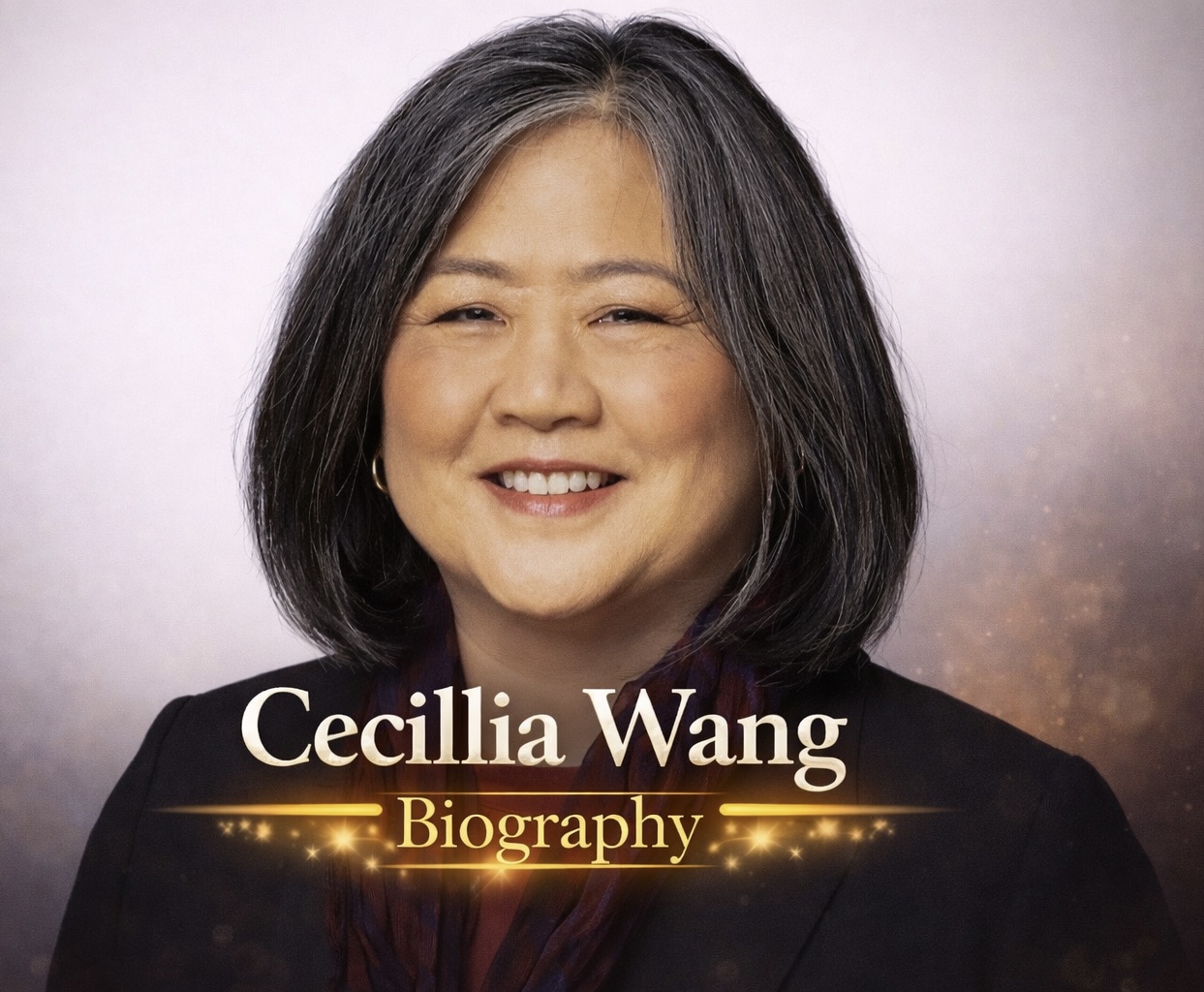
Who Is Cecillia Wang?
Cecillia Wang is an American civil rights lawyer, legal scholar, and the National Legal Director of the American Civil Liberties Union (ACLU), widely recognized for her work defending constitutional rights, immigration protections, and civil liberties in the United States. With an academic background from the University of California, Berkeley, and Yale Law School, as well as prestigious clerkships with U.S. Supreme Court Justice Harry Blackmun and Justice Stephen Breyer, she has built a career at the forefront of high-impact legal advocacy.
She is currently trending in 2026 due to her prominent role in U.S. Supreme Court debates on birthright citizenship, where she has been actively involved in challenging government positions that could affect the citizenship rights of millions of Americans. Her legal arguments and public statements have placed her at the center of one of the most significant constitutional discussions in modern U.S. history. A key highlight of her career is her leadership within the ACLU, where she has directed major litigation efforts on immigration rights, racial justice, and civil liberties, shaping national legal discourse and policy.
Cecillia Wang Early Life and Background
Cecillia Wang was born and raised in the United States as the child of immigrant parents, an identity that would later play a meaningful role in shaping her worldview and career. While her exact date of birth and birthplace are not publicly disclosed, her background reflects the experience of growing up in a family connected to both American society and immigrant roots.
Her upbringing was influenced by a strong awareness of fairness, opportunity, and the challenges faced by immigrant communities. Being part of an immigrant family exposed her early on to issues surrounding identity, belonging, and rights—experiences that would later guide her toward a career in civil rights law.
From a young age, she demonstrated a deep interest in education, critical thinking, and social issues, qualities that set the foundation for her future path. Her environment encouraged intellectual curiosity and a sense of responsibility toward addressing injustice, which became central themes in her life.
Although detailed personal anecdotes from her childhood are limited in public records, it is clear that her early life was shaped by cultural awareness, academic excellence, and a growing commitment to justice, all of which would later define her role as a leading figure in constitutional law and civil liberties advocacy.
Cecillia Wang Education Background and Academic Details
Cecillia Wang’s educational journey reflects a path of academic excellence, intellectual depth, and preparation for a high-impact legal career.
She completed her undergraduate studies at the University of California, Berkeley, where she earned a Bachelor of Arts in English (with highest honors) and Biology in 1992. Her time at Berkeley showcased both her analytical ability and interdisciplinary strength, combining humanities and science—an uncommon and rigorous academic combination.
She went on to attend the prestigious Yale Law School, where she earned her Juris Doctor (J.D.) in 1995. During her time at Yale, she distinguished herself academically and professionally, serving as an Articles Editor for the Yale Law Journal, one of the most respected legal publications in the world.
Following law school, she completed a series of highly competitive and prestigious judicial clerkships, including:
• Clerkship for U.S. Supreme Court Justice Harry Blackmun
• Clerkship for Justice Stephen Breyer
• Clerkship for Judge William A. Norris (U.S. Court of Appeals for the Ninth Circuit)
These clerkships provided her with direct exposure to constitutional law at the highest level, shaping her legal reasoning, advocacy skills, and deep understanding of the U.S. judicial system.
Overall, Cecillia Wang’s education laid a powerful foundation for her career, combining elite academic training, legal scholarship, and hands-on experience within the highest courts, ultimately preparing her to become one of the leading civil rights lawyers in the United States.
Cecillia Wang Career Journey, Achievements and Legal Impact
Cecillia Wang began her legal career with a strong foundation in public interest law and civil rights advocacy. After completing her prestigious clerkships, she worked as a staff attorney at the Federal Public Defender’s Office in the Southern District of New York, where she gained hands-on experience representing individuals and understanding the criminal justice system from the ground level.
She also spent time in private practice at Keker & Van Nest in San Francisco, where she developed her litigation skills in complex legal matters. However, her long-term focus remained on civil liberties and public interest law.
Her commitment to civil rights led her to join the American Civil Liberties Union (ACLU), where she initially worked as a fellow and later became deeply involved in litigation related to immigrants’ rights, racial justice, and constitutional protections.
Over time, she built a reputation as a skilled litigator and strategic legal thinker, handling high-impact cases and contributing to major civil rights efforts across the United States.
A significant turning point in her career came when she became the Director of the ACLU Immigrants’ Rights Project, where she led major legal challenges against policies that affected immigrant communities. Her leadership in this role positioned her as a national voice on immigration law and civil liberties.
Major Achievements
• Led litigation against racial profiling practices involving Arizona Sheriff Joe Arpaio
• Challenged restrictive immigration laws, including Alabama’s HB 56
• Played a role in overturning Arizona’s bail restrictions for undocumented immigrants (2014)
• Led lawsuits against federal agencies on issues such as domestic travel identification policies (2017)
• Appointed National Legal Director of the ACLU, one of the top legal leadership roles in the organization
Cecillia Wang advanced through key leadership roles within the ACLU, including serving as Deputy Legal Director (Center for Democracy) before becoming the National Legal Director. In this position, she oversees the organization’s nationwide litigation strategy, guiding legal efforts on issues such as:
• Immigration rights
• Voting rights
• Freedom of speech
• Racial justice
• Government accountability
She has also contributed to academia, serving as an adjunct lecturer at institutions such as Stanford University and UC Berkeley, sharing her expertise with the next generation of legal professionals.
As of 2025–2026, Cecillia Wang is actively serving as the National Legal Director of the ACLU, playing a central role in shaping major constitutional cases in the United States.
She is particularly prominent in ongoing U.S. Supreme Court debates on birthright citizenship, where she has been involved in legal arguments challenging government positions that could affect millions of Americans.
She is widely regarded as one of the leading civil rights lawyers of her time, influencing national policy through litigation and advocacy.
Cecillia Wang’s career reflects a powerful combination of legal expertise, leadership, and commitment to justice. From early public defense work to leading one of the most influential civil rights organizations in the United States, her journey demonstrates consistent impact, growth, and dedication to protecting constitutional rights.
Cecillia Wang Role in Birthright Citizenship Supreme Court Debate
Cecillia Wang has emerged as one of the leading legal voices in the 2025–2026 U.S. Supreme Court debates on birthright citizenship, representing arguments that challenge attempts to reinterpret or restrict the long-standing constitutional principle.
In these proceedings, she has taken a strong position against the U.S. government’s efforts to limit birthright citizenship, emphasizing that the 14th Amendment clearly guarantees citizenship to individuals born on U.S. soil. Drawing heavily on historical precedent, particularly the landmark case United States v. Wong Kim Ark (1898), she has argued that this principle has been firmly settled law for more than a century.
Her arguments focus on the constitutional text, historical interpretation, and practical consequences of altering this doctrine. She has warned that changing the interpretation of birthright citizenship could put the legal status of millions of Americans at risk, creating uncertainty around identity, rights, and belonging.
Cecillia Wang has also highlighted that the issue is not just legal but deeply human, stressing that any shift in policy would have real-world consequences for families, children, and communities across the country. Her advocacy reflects a broader concern about protecting civil liberties and preventing policies that could lead to exclusion or discrimination.
Through her role in these high-profile legal arguments, she has reinforced her position as a central figure in contemporary constitutional law, using her expertise and platform to defend long-standing legal protections and ensure that the principles of equality and citizenship remain intact.
Overall, her voice in these debates represents a powerful defense of constitutional rights, grounded in legal precedent, moral clarity, and a commitment to protecting the rights of individuals in modern American society.
Cecillia Wang Personal Life and Family
Cecillia Wang maintains a high level of privacy regarding her personal life, choosing to keep most details about her family and relationships out of the public spotlight. As a prominent legal figure, her public identity is primarily centered on her professional work rather than personal exposure.
Her relationship status is not publicly disclosed, and there are no widely verified records about a spouse or children. She has also kept information about her immediate family private, reflecting a deliberate boundary between her public career and personal life.
However, it is publicly known that she is the child of immigrants, a background that has played a meaningful role in shaping her perspective and commitment to civil rights and immigration advocacy. This personal connection is often reflected in her work, particularly in cases involving immigration, citizenship, and constitutional protections.
In terms of lifestyle, Cecillia Wang is known for a professionally driven and intellectually focused life, balancing leadership responsibilities at the ACLU with legal advocacy, public speaking, and academic involvement. She has also contributed to legal education as a lecturer, indicating a strong commitment to mentorship and knowledge-sharing.
Overall, Cecillia Wang’s personal life reflects privacy, purpose, and alignment with her values, with her identity largely shaped by her dedication to justice, equality, and the protection of civil liberties rather than public personal exposure.
Cecillia Wang Age, Religion, Tribe, Height & Physical Appearance
Cecillia Wang’s exact date of birth is not publicly disclosed, but based on available academic timelines, she is estimated to have been born in the early 1970s, placing her in her early to mid-50s as of 2026.
In terms of background, she is an American of Asian descent, born to immigrant parents. While her specific ethnic subgroup is not publicly detailed, she is generally associated with the broader Asian-American community.
Her religion or personal belief system has not been publicly confirmed, as she has not made this aspect of her life a subject of public discussion. Her public identity is primarily centered around her legal work and advocacy rather than religious affiliation.
Details about her height and exact physical measurements are not officially documented, but she is often seen presenting a professional and composed appearance, consistent with her role as a senior legal figure.
She is typically observed in formal or business attire, especially during court appearances, public lectures, and media engagements. Her appearance reflects confidence, professionalism, and authority, aligning with her position as a leading civil rights lawyer.
Overall, Cecillia Wang’s physical and personal attributes contribute to a public image defined by intellect, professionalism, and leadership, rather than stylistic or physical distinction.
Cecillia Wang Legacy
Cecillia Wang’s legacy is being shaped in real time as a leading figure in modern civil rights law and constitutional advocacy. Through her work with the American Civil Liberties Union (ACLU), she has played a central role in defending fundamental rights and challenging policies that affect millions of people across the United States.
One of the most defining aspects of her legacy is her leadership in high-impact litigation on immigration, civil liberties, and equality. As National Legal Director of the ACLU, she has helped guide legal strategies in cases that influence national policy, reinforcing constitutional protections in areas such as voting rights, free speech, and government accountability.
Her role in the 2025–2026 U.S. Supreme Court debates on birthright citizenship stands out as a key moment in her career. By arguing against efforts to limit the interpretation of the 14th Amendment, she has positioned herself as a central defender of long-standing constitutional principles, building on historic precedents and shaping contemporary legal discourse.
Beyond litigation, her contributions to legal education and mentorship have also influenced the next generation of lawyers, extending her impact beyond the courtroom. Her work reflects a commitment not only to winning cases but also to strengthening the broader framework of justice and civil rights.
Although her career is ongoing, Cecillia Wang is already recognized as a powerful voice for justice, equality, and constitutional integrity, with a legacy rooted in protecting rights and ensuring that the law serves all individuals fairly.
Overall, her legacy can be defined by leadership, advocacy, and lasting influence on civil liberties, positioning her as one of the key legal figures shaping the future of constitutional law in the United States.
Cecillia Wang Conclusion
Cecillia Wang stands as a powerful and influential figure in modern American law, combining intellectual excellence with a deep commitment to justice and civil rights. From her strong academic foundation to her leadership role at the ACLU, she has consistently worked to defend constitutional protections and advocate for vulnerable communities. Her involvement in major legal battles, including the ongoing debates on birthright citizenship, highlights her role in shaping critical national conversations. As her career continues to evolve, her impact remains significant, reflecting a legacy grounded in courage, integrity, and the pursuit of equality under the law.
Frequently Asked Questions About Cecillia Wang
1. Who is Cecillia Wang?
Cecillia Wang is an American civil rights lawyer and the National Legal Director of the ACLU.
2. What is Cecillia Wang known for?
She is known for her work in civil rights, immigration law, and constitutional litigation.
3. What is Cecillia Wang’s educational background?
She studied at the University of California, Berkeley, and earned a J.D. from Yale Law School.
4. What position does Cecillia Wang hold?
She serves as the National Legal Director of the American Civil Liberties Union (ACLU).
5. Has Cecillia Wang worked with the U.S. Supreme Court?
Yes, she clerked for U.S. Supreme Court Justice Harry Blackmun and Justice Stephen Breyer.
6. What major cases has Cecillia Wang been involved in?
She has worked on cases involving immigration rights, racial profiling, voting rights, and civil liberties.
7. Why is Cecillia Wang trending in 2026?
She is trending due to her role in U.S. Supreme Court debates on birthright citizenship.
8. What is Cecillia Wang’s role in the birthright citizenship debate?
She has argued against efforts to limit birthright citizenship, defending the 14th Amendment.
9. Is Cecillia Wang married?
Her marital status is not publicly disclosed.
10. What is Cecillia Wang’s age?
Her exact age is not publicly confirmed, but she is estimated to be in her early to mid-50s.
11. What is Cecillia Wang’s nationality?
She is American.
12. Does Cecillia Wang have social media accounts?
Yes, she has a presence on X (Twitter) under @WangCecillia.
13. What impact has Cecillia Wang made?
She has influenced major legal decisions and policies related to civil liberties and immigration law.
Read more:
- Wong Kim Ark Biography: Birthright Citizenship Case, Age, 14th Amendment, Career, Family & Legacy
- Devendra Kumar IAS Biography: Age, Education, Career, Posting, Net Worth & Rajasthan Cadre