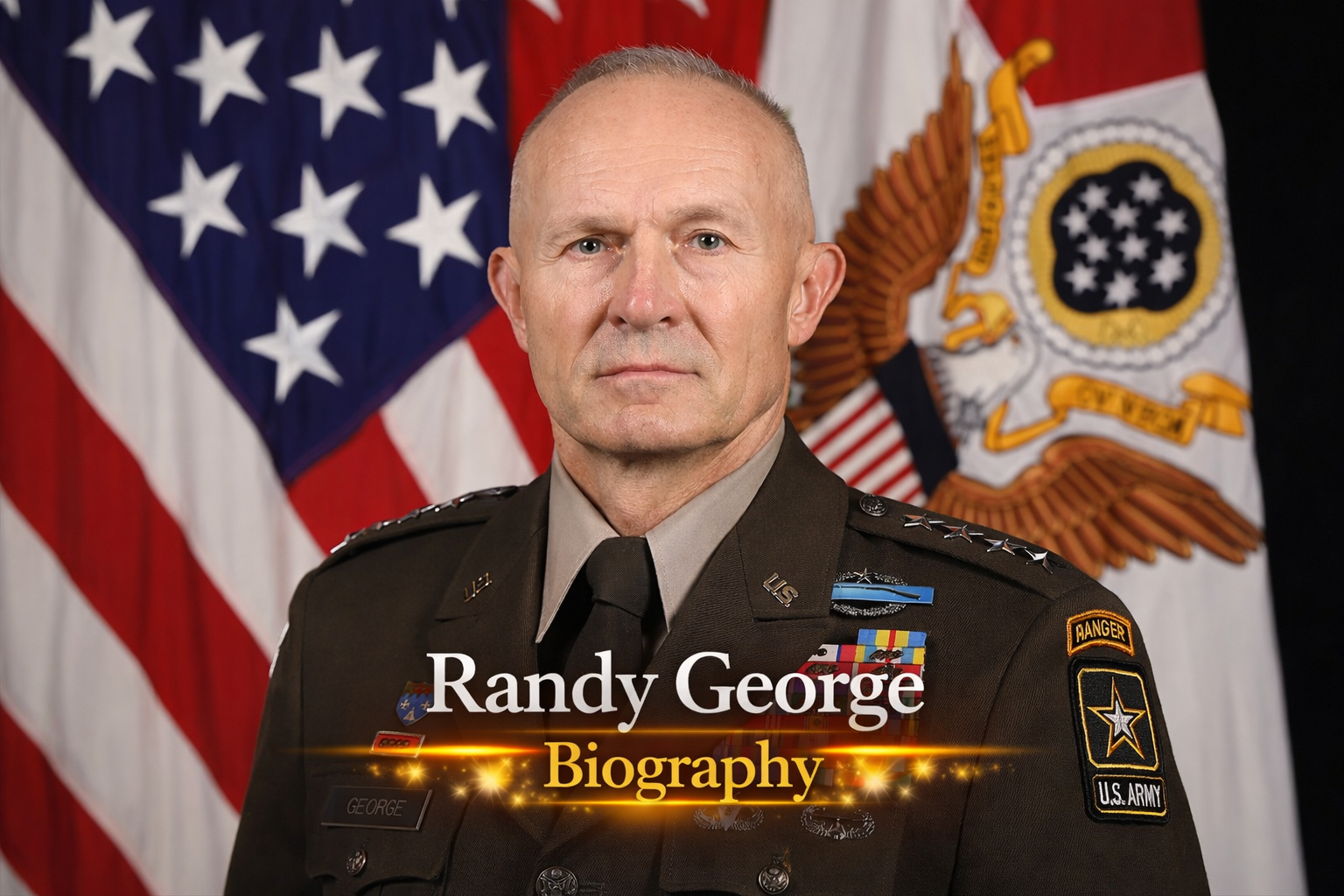
Who Is Randy George?
Randy Alan George is a highly respected American military leader and a four-star general in the United States Army, best known for serving as the 41st Chief of Staff of the U.S. Army. Born on November 1, 1964, in Alden, Iowa, he built a distinguished career spanning over four decades, rising from an enlisted soldier to one of the highest-ranking positions in the U.S. military. Throughout his service, he played key roles in major operations, including deployments in Iraq and Afghanistan, and held several top leadership positions across the Army.
He is currently trending in 2026 following his sudden removal from the role of Chief of Staff, a move that has sparked widespread attention and debate within military and political circles. A major highlight of his career remains his leadership in modernizing the Army through strategic initiatives aimed at preparing the force for future conflicts. His journey reflects a rare combination of battlefield experience, strategic leadership, and long-term commitment to national service.
Randy George Early Life and Background
Randy Alan George was born on November 1, 1964, in Alden, Iowa, United States, where he spent his early years growing up in a small, disciplined community environment. Raised in Iowa, his upbringing was shaped by strong values of hard work, responsibility, and service, which would later define his path in the military.
From a young age, he showed a deep sense of commitment and determination, qualities that set him apart early in life. Unlike many who take a traditional academic route first, he chose to enlist in the United States Army in 1982, shortly after completing his early education. This decision marked the beginning of a lifelong dedication to military service.
His early experiences as an enlisted soldier gave him a unique perspective on leadership, allowing him to understand the realities of military life from the ground level. This foundation would later play a crucial role in shaping his leadership style as he rose through the ranks.
Growing up in a modest environment and entering the Army at a young age, Randy George’s early life reflects a story of discipline, ambition, and a strong sense of duty, laying the groundwork for his eventual rise to one of the most powerful positions in the U.S. military.
Randy George Education Background and Academic Details
Randy Alan George’s educational journey reflects a strong blend of military discipline, academic excellence, and strategic development, all of which played a critical role in shaping his rise through the ranks of the United States Army.
After beginning his military journey as an enlisted soldier, he went on to attend the United States Military Academy (West Point), where he earned a Bachelor of Science degree in Engineering in 1988. His time at West Point not only provided him with a solid technical foundation but also instilled the leadership principles and discipline required of top military officers.
Driven to further expand his knowledge, he later pursued a Master’s degree in Economics from the Colorado School of Mines, equipping him with a deeper understanding of resource management, decision-making, and economic strategy—skills essential for high-level military leadership.
He also attended the Naval War College, where he earned a Master’s degree in International Security Studies. This advanced education exposed him to global security issues, defense policy, and strategic planning at an international level.
In addition, he completed professional military education at the U.S. Army Command and General Staff College, further refining his operational and leadership capabilities.
Overall, Randy George’s education combined technical expertise, economic insight, and strategic military training, preparing him for complex leadership roles and enabling him to effectively guide large-scale military operations and organizational transformation.
Randy George Career Journey, Achievements and Military Service
Randy Alan George began his military career in 1982 when he enlisted in the United States Army, demonstrating an early commitment to service. After gaining initial experience as an enlisted soldier, he later attended the United States Military Academy and was commissioned as an infantry officer in 1988.
His early years as an officer were shaped by hands-on leadership roles, where he developed strong operational skills and a deep understanding of ground-level military operations.
George served in key assignments within the 101st Airborne Division, one of the Army’s most elite units. During this period, he gained valuable combat and operational experience, including participation in the Gulf War, which exposed him to real-world military challenges early in his career.
As he advanced, he continued to take on roles that required both leadership and strategic thinking, steadily building a reputation as a capable and disciplined officer.
A significant turning point in his career came as he rose into senior leadership positions, particularly during the Iraq and Afghanistan wars, where he served in multiple deployments. His performance in combat environments strengthened his credibility and positioned him for higher command roles.
Major Achievements
• Served in multiple combat operations in Iraq and Afghanistan
• Commanded major military units, including the 4th Infantry Division
• Led large-scale operations involving thousands of soldiers
• Earned numerous military honors, including the Bronze Star and Purple Heart
Career Progression
Randy George’s leadership abilities led to a series of high-level appointments:
• Commanding General, I Corps (2020–2021)
• Senior Military Assistant to the Secretary of Defense (2021–2022)
• Vice Chief of Staff of the Army (2022–2023)
These roles placed him at the center of U.S. military strategy, policy, and operations, allowing him to influence decisions at the highest levels of defense leadership.
In 2023, he reached the pinnacle of his career when he was appointed the 41st Chief of Staff of the United States Army, becoming the top uniformed officer responsible for overseeing the organization, training, and readiness of the Army.
As of April 2026, his tenure came to an abrupt end when he was removed from the position of Chief of Staff, a rare and significant event in U.S. military history. At the time, he still had over a year remaining in his term.
During his time as Chief of Staff, he led efforts to modernize the Army, focusing on transformation, readiness, and future warfare capabilities.
Randy George’s career reflects a remarkable journey from enlisted soldier to one of the highest-ranking officers in the U.S. military. His path is defined by combat experience, strategic leadership, and decades of service, marking him as a key figure in modern Army leadership.
Randy George Removal from Position as U.S. Army Chief of Staff
Randy Alan George’s removal as the 41st Chief of Staff of the United States Army in April 2026 became one of the most significant and controversial moments of his career, drawing widespread attention across military and political circles.
In April 2026, he was asked to step down from his position by U.S. Defense Secretary Pete Hegseth, effectively ending his tenure more than a year before its expected completion. The decision was unexpected, particularly given his seniority, experience, and the critical role he was playing in overseeing Army operations and modernization efforts.
What made the situation even more notable was the timing. His removal occurred during a period of active U.S. military engagement and heightened global tensions, making it highly unusual for a top military leader to be replaced under such circumstances. Historically, changes at this level are carefully timed and rarely happen abruptly during ongoing operations.
No detailed official explanation was publicly provided for his removal, which fueled speculation and debate. Analysts and observers questioned whether the decision was driven by internal policy disagreements, strategic differences, or broader shifts in defense leadership priorities.
The move was widely seen as part of a larger Pentagon leadership shake-up, with multiple senior officials affected. This added to concerns about stability and continuity within military leadership at a critical time.
Following his departure, General Christopher LaNeve was named as the acting Chief of Staff, stepping in to maintain continuity in Army leadership.
The removal of Randy George is considered a rare and significant event in U.S. military history, highlighting the complex intersection of military leadership, politics, and national security. It has since become a defining chapter in his career, shaping how his legacy and tenure are viewed.
Randy George Personal Life and Family
Randy Alan George has maintained a highly private and disciplined personal life, consistent with his long-standing career in the United States Army. Unlike public figures in entertainment or politics, he has kept most aspects of his family and personal relationships away from media attention.
He is known to be a family-oriented individual, though detailed information about his spouse, children, or extended family is not widely disclosed. This level of privacy reflects the culture of senior military leadership, where personal matters are often kept separate from professional responsibilities.
Throughout his career, his life has been largely centered around military service, leadership, and national duty. Frequent deployments, high-level assignments, and global responsibilities meant that much of his time was dedicated to his role in the Army.
In terms of lifestyle, Randy George is associated with a structured, disciplined, and modest way of living, typical of senior military officers. His routine and public image reflect professionalism, responsibility, and a strong commitment to service rather than personal publicity or luxury.
He is also known for his leadership values, emphasizing teamwork, accountability, and resilience—qualities that have influenced both his professional decisions and personal outlook.
Overall, Randy George’s personal life reflects a balance of privacy, discipline, and dedication, shaped by decades of service in one of the most demanding professions in the world.
Randy George Age, Religion, Tribe, Height & Physical Appearance
Randy Alan George was born on November 1, 1964, making him 61 years old as of 2026. His age reflects a long and accomplished career spanning more than four decades in the United States Army.
He is American by nationality, with a background rooted in the Midwestern United States. Specific details about his tribe or ethnic subgroup are not publicly emphasized, as his identity is primarily associated with his military service and leadership.
There is no publicly confirmed information about his religion or personal belief system, as he has maintained privacy regarding this aspect of his life.
In terms of physical appearance, Randy George has a fit and disciplined physique, consistent with the physical demands of a lifelong military career. While his exact height is not widely documented, he appears to have an average-to-tall stature, typical of senior military officers.
He is most commonly seen in U.S. Army military uniforms, reflecting his role and rank, often carrying a composed and authoritative presence. His appearance conveys discipline, strength, and leadership, reinforced by his posture, demeanor, and years of service in high-pressure environments.
Overall, his physical attributes and presence contribute to a public image defined by professionalism, authority, and resilience, aligning with his role as a senior military leader.
Randy George Legacy and Impact
Randy Alan George’s legacy is defined by a lifetime of service, leadership, and transformation within the United States Army, marking him as one of the most experienced and influential military leaders of his generation.
One of the most significant aspects of his legacy is his rise from an enlisted soldier in 1982 to a four-star general and Chief of Staff of the Army, a journey that reflects dedication, resilience, and deep institutional knowledge. This rare path gave him a unique leadership perspective, allowing him to understand the Army at every level.
During his tenure as Chief of Staff (2023–2026), he played a key role in advancing the Army Transformation Initiative, focusing on modernization, force readiness, and preparing the military for future conflicts. His efforts aimed to reshape the Army into a more agile and technologically advanced force capable of responding to evolving global threats.
His extensive combat experience in Iraq and Afghanistan, along with his leadership of major units like the 4th Infantry Division and I Corps, further solidified his reputation as a battle-tested and strategic leader.
However, his legacy is also shaped by the controversial and abrupt end to his tenure in 2026, when he was removed from his position as Chief of Staff. This rare event has become a defining moment in how his career is viewed, sparking ongoing discussions about military leadership, political influence, and institutional stability.
Despite this, he is widely recognized for his contributions to military operations, leadership development, and organizational reform, leaving behind a lasting impact on the structure and direction of the U.S. Army.
Overall, Randy George’s legacy is one of commitment, experience, and transformation, reflecting both the achievements and complexities of leading at the highest level of military command.
Randy George Conclusion
Randy Alan George’s career stands as a powerful example of dedication, resilience, and leadership at the highest level of military service. From his early days as an enlisted soldier to becoming the Chief of Staff of the United States Army, he built a legacy shaped by decades of experience, strategic influence, and commitment to national defense. While his sudden removal in 2026 added a complex and controversial chapter to his story, it does not overshadow his contributions to modernizing the Army and leading troops through critical moments in history. His journey reflects both the achievements and challenges of serving at the top of military leadership.
Frequently Asked Questions About Randy George
1. Who is Randy Alan George?
Randy Alan George is a United States Army four-star general who served as the 41st Chief of Staff of the U.S. Army.
2. When was Randy George born?
He was born on November 1, 1964.
3. How old is Randy George?
He is 61 years old as of 2026.
4. Where is Randy George from?
He is from Alden, Iowa, United States.
5. What is Randy George known for?
He is known for serving as the Chief of Staff of the U.S. Army and for his leadership in military operations and modernization efforts.
6. When did Randy George become Chief of Staff of the Army?
He became the 41st Chief of Staff of the U.S. Army in 2023.
7. Why was Randy George removed from his position?
He was asked to step down in April 2026, though no detailed official reason was publicly disclosed.
8. What wars did Randy George serve in?
He served in the Gulf War, Iraq War, and Afghanistan War.
9. Did Randy George start his career as an officer?
No, he initially enlisted in the Army in 1982 before becoming an officer in 1988.
10. What is Randy George’s educational background?
He studied at West Point, the Colorado School of Mines, and the Naval War College.
11. What is Randy George’s nationality?
He is American.
Read more:
- Nick Kroll Net Worth 2026: Income Sources, Business Empire, Investments, Lifestyle & Assets
- Phillip Phillips Net Worth 2026: Income Sources, Business Empire, Investments, Lifestyle & Assets