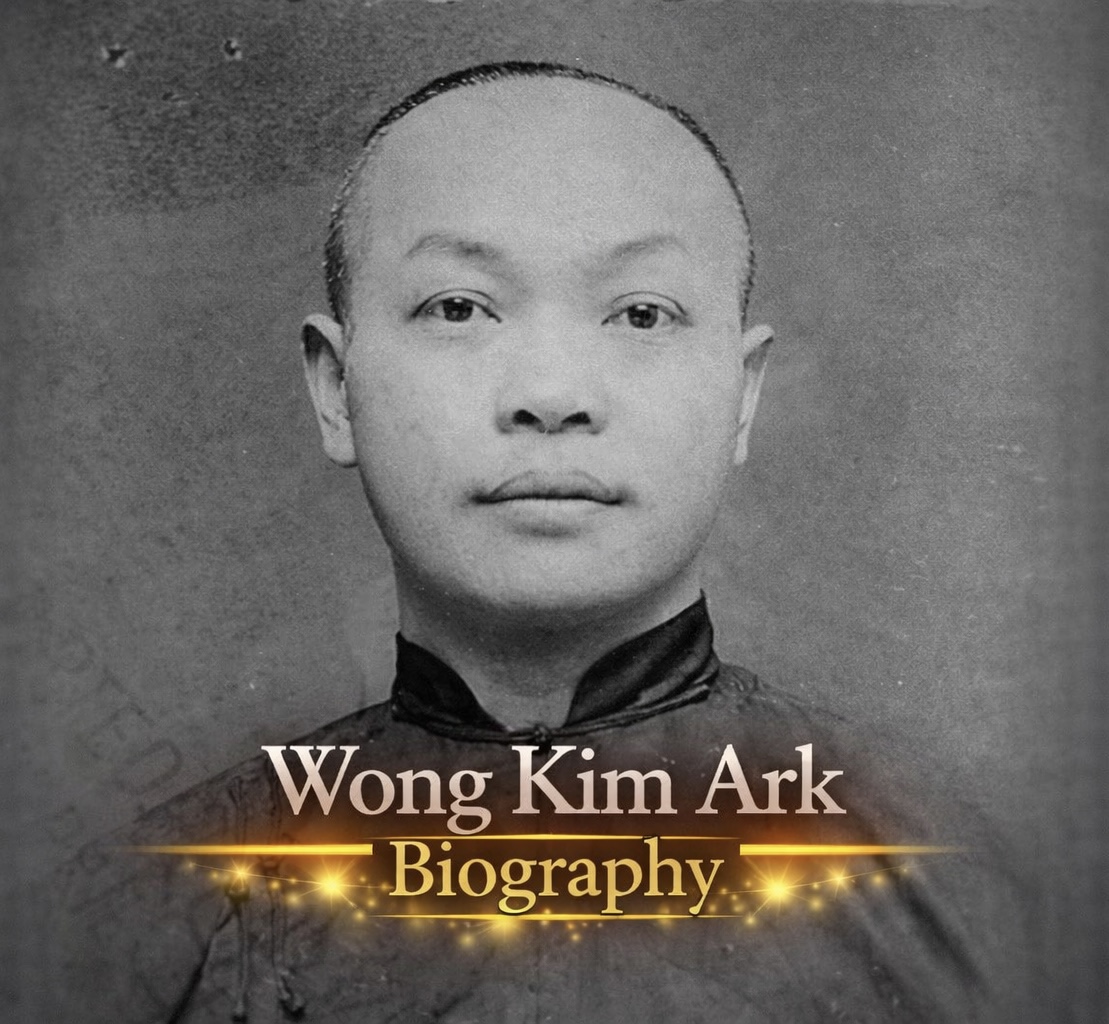
Who Is Wong Kim Ark?
Wong Kim Ark was a Chinese-American laborer whose name became permanently etched in United States history through a landmark Supreme Court case that defined the principle of birthright citizenship. Born in San Francisco, California, around 1871–1873 to Chinese immigrant parents, he was an American by birth at a time when anti-Chinese sentiment and restrictive immigration laws were widespread. Despite living a modest life as a cook and laborer, his legal battle would go on to shape the constitutional rights of millions.
He is currently trending again in 2026 as his case, United States v. Wong Kim Ark (1898), is being revisited in modern legal and political debates surrounding immigration and citizenship laws in the United States. His case remains a central reference point in discussions about the 14th Amendment, particularly the clause guaranteeing citizenship to individuals born on U.S. soil. A key highlight of his life is his victory in the Supreme Court, which firmly established the doctrine of birthright citizenship, making him one of the most historically significant yet often overlooked figures in American legal history.
Wong Kim Ark Early Life and Background
Wong Kim Ark was born around 1871–1873 in San Francisco, California, United States, at a time when Chinese immigrants faced intense discrimination and legal restrictions. By birth, he entered a society that was deeply divided along racial and political lines, especially toward Asian communities.
He was born to Chinese immigrant parents who were subjects of the Qing Empire. His family was part of the early Chinese community in San Francisco, and they operated a small business in Chinatown, which was a common livelihood among immigrant families trying to survive in a challenging environment.
Growing up in San Francisco’s Chinatown, Wong Kim Ark experienced a life shaped by both cultural heritage and social exclusion. His upbringing reflected the struggles of immigrant families—balancing their Chinese identity while navigating a society that often denied them full acceptance.
During his youth, he also spent time in China, as it was common for immigrant families to send children back and forth between the United States and their ancestral homeland. This experience exposed him to both cultures but also placed him in a complicated position regarding identity and belonging.
Overall, his early life was defined by hardship, cultural duality, and systemic discrimination, circumstances that would later play a crucial role in the legal battle that made him a historic figure in American constitutional law.
Wong Kim Ark Education Background and Academic Details
There are no verified or documented records of formal education for Wong Kim Ark. Unlike many public figures, he came from a working-class immigrant background, where access to structured schooling was often limited, especially for Chinese families living in the United States during the late 19th century.
Growing up in San Francisco’s Chinatown, his early life was more focused on family responsibilities and survival rather than academic pursuits. At the time, Chinese immigrants faced significant social and legal barriers, including discrimination that affected access to education and public institutions.
It is likely that any learning he received was informal or community-based, possibly within family or local cultural settings rather than formal schools. His later work as a cook and laborer further reflects a life shaped more by practical experience than academic training.
Overall, Wong Kim Ark’s education was not defined by degrees or institutions, but his life would go on to have a far greater impact through his role in a historic legal case that shaped constitutional law in the United States.
Wong Kim Ark Career Journey and Supreme Court Case Impact
Wong Kim Ark’s working life was rooted in the realities of a working-class immigrant existence in late 19th-century America. He worked primarily as a cook and laborer in San Francisco, a common occupation among Chinese immigrants at the time, especially within Chinatown communities.
His career did not follow a traditional or high-profile path. Instead, it reflected the limited opportunities available to Chinese immigrants due to widespread discrimination and restrictive laws such as the Chinese Exclusion Act. Despite these barriers, he maintained steady employment and remained connected to both the United States and China, traveling between the two countries.
The defining turning point in his life—and effectively his “career”—came in 1895, when he returned to the United States after visiting China and was denied re-entry by U.S. authorities. Despite being born in San Francisco, he was refused entry on the grounds that he was not considered a citizen under prevailing interpretations of the law.
Determined to challenge this injustice, Wong Kim Ark took legal action against the U.S. government. His case eventually reached the United States Supreme Court.
Major Achievements
• 1898: Won the landmark Supreme Court case United States v. Wong Kim Ark
• Established the legal principle of birthright citizenship under the 14th Amendment
• Secured recognition that individuals born in the U.S. are citizens regardless of their parents’ nationality
Following the Supreme Court victory, Wong Kim Ark was officially recognized as a U.S. citizen, allowing him to continue living and working in the country. He resumed his life as a cook and laborer, maintaining a modest livelihood.
He continued to travel between the United States and China, and records indicate that he faced additional immigration-related challenges when attempting to bring family members into the country, reflecting the ongoing discrimination of the era.
Unlike modern public figures, Wong Kim Ark did not pursue a prominent public career after his legal victory. He remained a private individual, living a quiet life despite the monumental impact of his case.
His legal battle became one of the most significant constitutional decisions in U.S. history, shaping immigration law and citizenship rights for generations.
Wong Kim Ark’s “career” was not defined by profession or status, but by a single, courageous legal challenge that changed the course of American law. From a modest life as a laborer, he became the central figure in a Supreme Court decision that continues to influence millions of lives to this day.
Wong Kim Ark Connection with U.S. Supreme Court Debate on Birthright Citizenship
Wong Kim Ark’s name has become central once again in modern legal discussions because his case, United States v. Wong Kim Ark (1898), remains the foundation of birthright citizenship in the United States. The Supreme Court’s ruling in his favor established that any person born on U.S. soil is automatically a citizen under the 14th Amendment, regardless of their parents’ nationality or immigration status.
In 2025–2026, his case has re-emerged in U.S. Supreme Court debates and broader political discussions surrounding immigration reform and citizenship laws. Lawmakers, legal scholars, and policymakers continue to reference Wong Kim Ark’s case when debating whether birthright citizenship should be reinterpreted, limited, or upheld as originally defined.
Supporters of birthright citizenship frequently cite his case as a clear constitutional precedent, arguing that the Supreme Court’s 1898 decision firmly settled the issue. They emphasize that the ruling has stood for over a century and has been a cornerstone of American constitutional law.
On the other hand, critics and some political voices have questioned whether the interpretation of the 14th Amendment should be revisited, especially in the context of modern immigration challenges. This has brought renewed attention to Wong Kim Ark’s case, making it a key reference point in contemporary legal arguments.
What makes his connection so significant is that, although he lived a quiet life as a laborer, his legal battle continues to influence millions of citizenship claims in the United States today. His case is not just a historical decision—it is an active legal precedent still shaping policy, court arguments, and constitutional interpretation in 2026.
Overall, Wong Kim Ark’s connection to the current U.S. Supreme Court debate highlights how a single case from the 19th century remains deeply relevant, serving as the legal backbone of one of the most important and contested constitutional issues in modern America.
Wong Kim Ark Personal Life and Family
Wong Kim Ark lived a largely private and modest personal life, with limited documented details available, as was common for working-class immigrants in the late 19th and early 20th centuries.
He was married to a woman named Yee Shee, whom he wed in China. Their marriage reflects the common practice among Chinese immigrants of maintaining strong ties to their homeland while working in the United States.
He had children, and records indicate that he made efforts to support his family financially. However, his family life was not without challenges. Like many Chinese immigrants of his time, he faced strict immigration laws, and there were documented difficulties related to bringing his children into the United States, highlighting the harsh realities of the era.
His lifestyle was shaped by hard work and simplicity. He worked as a cook and laborer, living within the constraints faced by immigrant communities. Despite becoming the central figure in a landmark Supreme Court case, he did not transition into public life or fame, choosing instead to continue living quietly.
Wong Kim Ark also maintained connections with both the United States and China, traveling between the two countries during his lifetime. This dual connection reflected the broader immigrant experience of balancing identity, family, and opportunity across borders.
Overall, his personal life was defined by family responsibility, resilience, and modest living, standing in contrast to the enormous legal and historical impact his name would later carry.
Wong Kim Ark Age, Religion, Tribe, Height & Physical Appearance
Wong Kim Ark was born around 1871–1873, although his exact date of birth is not definitively recorded. As a historical figure from the 19th century, details about his exact age at death remain unknown, as no confirmed death records clearly document this information.
In terms of background, he was of Chinese ethnicity, with his family originating from China during the Qing Dynasty. While specific tribal or sub-ethnic identification is not documented, he belonged broadly to the Chinese immigrant community in the United States.
There are no verified records confirming his religious beliefs. Like many Chinese immigrants of that period, he may have been influenced by traditional Chinese belief systems, but no official or documented religious affiliation is available.
Details about his height and physical measurements are not recorded in historical documents. However, descriptions suggest he had a typical appearance of a working-class Chinese man of his era, with a modest and practical presentation suited to his lifestyle as a laborer.
He was likely seen in simple, functional clothing, reflecting his occupation as a cook and laborer. There are no widely recognized portraits or detailed physical descriptions that define distinctive features.
Overall, much of Wong Kim Ark’s personal and physical identity remains undocumented, but his cultural background as a Chinese-American and his historical role have defined his identity far more than physical attributes or personal descriptors.
Wong Kim Ark Legacy
Wong Kim Ark’s legacy is one of the most profound and enduring in American constitutional history, despite his life as an ordinary working-class individual. His name is permanently tied to the landmark Supreme Court case United States v. Wong Kim Ark (1898), which established the principle of birthright citizenship under the 14th Amendment.
One of the most significant aspects of his legacy is that his legal victory created a lasting constitutional precedent affirming that anyone born on U.S. soil is automatically a citizen, regardless of their parents’ nationality. This ruling has shaped the identity and legal status of millions of Americans across generations.
His impact extends far beyond his lifetime, as his case continues to be cited in modern legal debates, court decisions, and immigration policy discussions, including ongoing conversations in 2025–2026 about the future of birthright citizenship. His case remains the foundation of citizenship law in the United States, making him one of the most influential figures in this area of law.
Wong Kim Ark’s story also represents a powerful symbol of resistance against discrimination and injustice. At a time when Chinese immigrants faced severe exclusion and legal barriers, his decision to challenge the U.S. government demonstrated courage and determination.
Although he lived a quiet life and did not seek public recognition, his legacy stands as a reminder that ordinary individuals can create extraordinary change. His case continues to protect civil rights and define what it means to be an American citizen.
Overall, Wong Kim Ark’s legacy is one of legal transformation, constitutional clarity, and lasting impact, ensuring that his name remains central to one of the most important principles in U.S. law.
Wong Kim Ark Conclusion
Wong Kim Ark’s life stands as a remarkable example of how an ordinary individual can leave an extraordinary mark on history. Though he lived a quiet and modest life as a laborer, his determination to challenge injustice led to a Supreme Court decision that continues to define citizenship in the United States. His legacy goes far beyond his personal story, shaping the rights of millions and remaining central to ongoing legal and political debates. Even more than a century later, his impact endures as a powerful symbol of justice, equality, and the lasting strength of constitutional rights.
Frequently Asked Questions About Wong Kim Ark
1. Who is Wong Kim Ark?
Wong Kim Ark was a Chinese-American man known for the landmark U.S. Supreme Court case that established birthright citizenship.
2. When was Wong Kim Ark born?
He was born around 1871–1873 in San Francisco, California.
3. What is Wong Kim Ark famous for?
He is famous for the 1898 Supreme Court case United States v. Wong Kim Ark, which affirmed birthright citizenship under the 14th Amendment.
4. What was the outcome of his Supreme Court case?
The Court ruled that anyone born in the United States is automatically a U.S. citizen, regardless of their parents’ nationality.
5. Why was Wong Kim Ark denied entry into the U.S.?
He was denied re-entry in 1895 after visiting China due to laws targeting Chinese immigrants, despite being born in the U.S.
6. What law affected Wong Kim Ark’s case?
His case was influenced by the Chinese Exclusion Act and interpretations of the 14th Amendment.
7. What was Wong Kim Ark’s occupation?
He worked as a cook and laborer.
8. Was Wong Kim Ark married?
Yes, he was married to a woman named Yee Shee.
9. Did Wong Kim Ark have children?
Yes, he had children, though some faced immigration-related challenges.
10. What is Wong Kim Ark’s nationality?
He was an American citizen by birth, as confirmed by the Supreme Court.
11. What is Wong Kim Ark’s legacy?
He is remembered for establishing birthright citizenship in the United States.
12. Why is Wong Kim Ark relevant today?
His case is still referenced in modern debates about immigration and citizenship laws.
13. Is Wong Kim Ark trending in 2026?
Yes, his case is being discussed again in U.S. Supreme Court and political debates on birthright citizenship.
14. What does the 14th Amendment say about citizenship?
It guarantees citizenship to anyone born or naturalized in the United States.
15. Did Wong Kim Ark live a public life after his case?
No, he lived a quiet life despite his major legal impact.
Read more:
- Devendra Kumar IAS Biography: Age, Education, Career, Posting, Net Worth & Rajasthan Cadre
- Stephen Lewis Biography: Age, Career, Death, Illness, Wife, Net Worth & Legacy