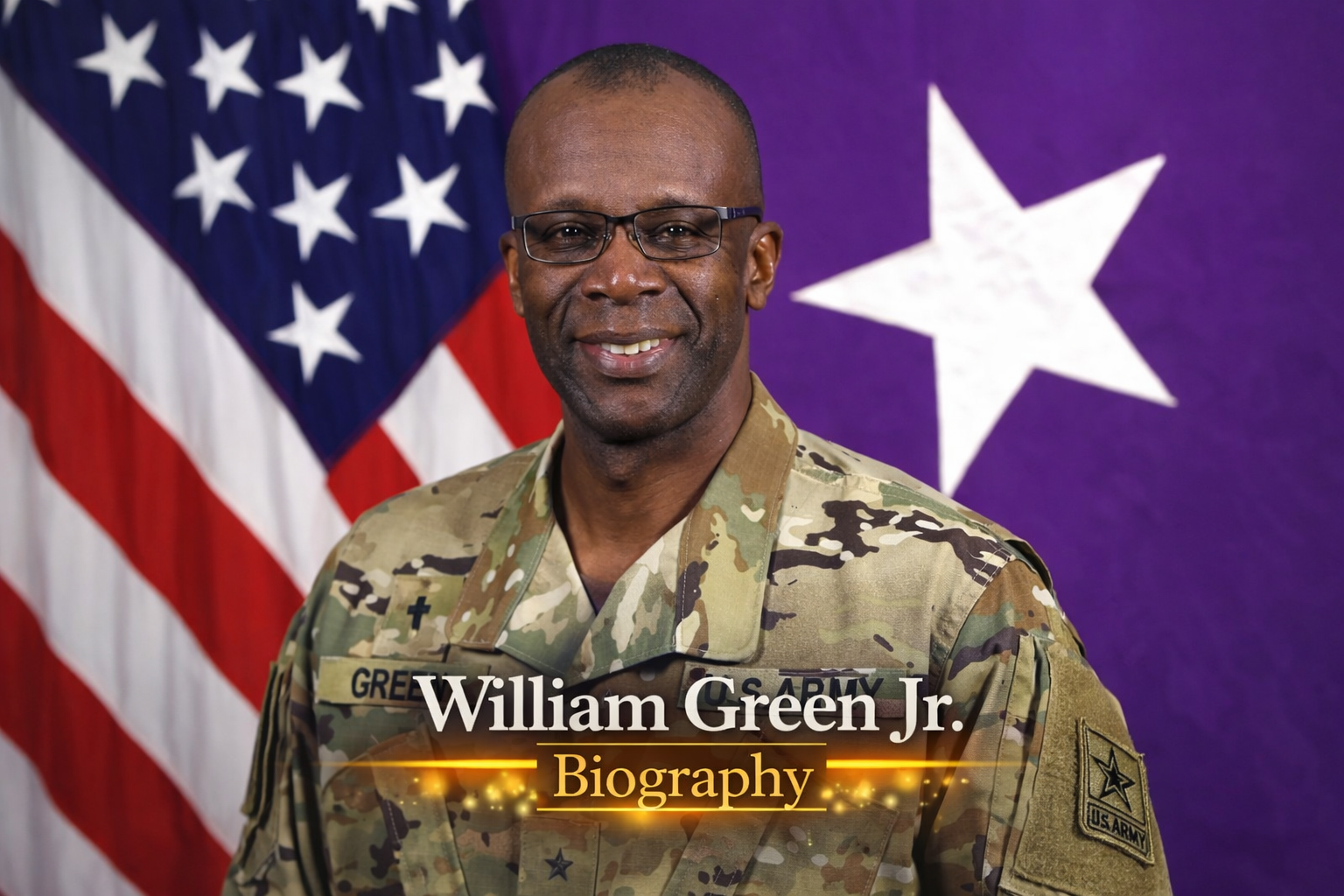
Who Is William Green Jr?
William “Bill” Green Jr. is a senior American military leader and ordained minister who served as a Major General in the United States Army and as the 26th Chief of Chaplains. Known for his unique combination of military leadership and spiritual guidance, he has spent decades supporting soldiers both on and off the battlefield. His career stands out for bridging the gap between operational military service and faith-based leadership, making him a key figure in the Army’s chaplain corps.
He is currently trending in 2026 following his sudden removal from the position of Chief of Chaplains, a decision that has drawn significant public attention as part of a broader shake-up within Pentagon leadership. A major highlight of his career includes overseeing thousands of Army chaplains worldwide, ensuring the spiritual well-being, morale, and ethical guidance of soldiers across global operations. His journey reflects a rare blend of service, faith, and leadership at the highest levels of the U.S. Army.
Early Life and Background: William Green Jr Family and Upbringing
William “Bill” Green Jr. was born in Savannah, Georgia, United States, and spent much of his early life growing up in Hilton Head Island, South Carolina. Raised in a close-knit family, he was brought up with strong values centered around faith, discipline, and service, which would later shape both his spiritual calling and military career.
He comes from a family with a strong sense of responsibility and achievement. His father, William Green Sr., and mother, Mary Green, played important roles in his upbringing, while one of his siblings also pursued a military path, eventually becoming a retired U.S. Army colonel. This environment of service and leadership had a lasting influence on his early ambitions.
From a young age, Green showed a clear inclination toward both service and faith, balancing practical responsibilities with a growing interest in ministry. Before fully committing to his religious path, he initially entered the military, enlisting in the U.S. Army, which gave him early exposure to discipline and leadership.
His early life reflects a foundation built on family values, military influence, and spiritual development, all of which combined to guide him toward a unique career that would merge faith and military service at the highest level.
Education: William Green Jr Academic Background and Qualifications
William “Bill” Green Jr.’s educational journey reflects a strong combination of academic development and spiritual formation, which laid the foundation for his dual career in ministry and military service.
He attended Savannah State University, where he earned a Bachelor’s degree in Criminal Justice in 1989. This early academic path provided him with a structured understanding of law, discipline, and societal systems, complementing his initial experience in the military.
Driven by a deeper calling toward faith and ministry, he later pursued theological education at Emory University, where he obtained a Master of Divinity in 1992. This degree was a significant turning point in his life, equipping him with the spiritual knowledge, pastoral training, and leadership skills required to serve as a minister.
Following his theological training, he became an ordained minister in the Baptist tradition, formally entering a path that combined spiritual leadership with service to others.
Overall, his education reflects a purposeful journey that blends practical knowledge, spiritual depth, and leadership development, preparing him for a unique role as both a military officer and a religious leader within the United States Army.
Career: William Green Jr Military Service and Chaplaincy Journey
William “Bill” Green Jr. began his professional journey by enlisting in the United States Army, where he served as a cannon crewman and radio repairman. This early experience gave him firsthand exposure to military life, discipline, and the challenges faced by soldiers in active service.
After leaving active duty in 1986, he chose to pursue his calling in ministry, focusing on spiritual development and theological training. This period marked a transition from purely military service to a path that would eventually combine both faith and leadership.
In 1994, Green officially entered the U.S. Army Chaplain Corps as a chaplain, bringing together his military background and religious training. This marked the beginning of a long and impactful career dedicated to supporting soldiers’ spiritual and emotional well-being.
Throughout his early years as a chaplain, he served in a variety of assignments, both in the United States and internationally. His roles included:
• Chaplain with the 1st Armored Division in Germany
• Chaplain with the 28th Combat Support Hospital during deployments
These assignments allowed him to work closely with soldiers in both peacetime and operational environments, providing counseling, guidance, and religious services.
A key turning point in his career came as he advanced into senior leadership roles within the Chaplain Corps. His ability to lead large teams and manage spiritual programs across units positioned him for higher-level responsibilities.
Major Achievements
• Served in multiple operational environments supporting deployed soldiers
• Provided leadership within large military formations
• Earned numerous military honors, including the Legion of Merit and Bronze Star Medal
• Played a key role in shaping chaplaincy programs within the Army
Green continued to rise through the ranks, taking on increasingly significant leadership roles:
• Command Chaplain, U.S. Army Pacific (Fort Shafter, Hawaii)
• Oversaw religious support operations across a major geographic command
He later became:
• Deputy Chief of Chaplains (2019–2023)
In this role, he helped guide policy, training, and global chaplain operations for the Army.
In December 2023, he was appointed as the 26th Chief of Chaplains of the United States Army, one of the highest positions within the Chaplain Corps.
As Chief of Chaplains, he:
• Oversaw approximately 5,000 chaplains and religious affairs specialists worldwide
• Ensured spiritual readiness and moral guidance for soldiers
• Advised senior Army leadership on religious and ethical matters
As of April 2026, his tenure ended abruptly when he was removed from the position of Chief of Chaplains, as part of a broader Pentagon leadership shake-up.
During his leadership, he played a significant role in strengthening the spiritual support structure of the Army, ensuring that soldiers across the globe had access to religious services and counseling.
William Green Jr.’s career reflects a unique journey that blends military service and spiritual leadership. From enlisted soldier to Major General and Chief of Chaplains, his path demonstrates dedication, faith, and leadership, making him a key figure in the modern U.S. Army Chaplain Corps.
Removal as Chief of Chaplains: Why William Green Jr Was Removed in 2026
William “Bill” Green Jr.’s removal as the 26th Chief of Chaplains of the United States Army in April 2026 became one of the most significant and unexpected moments of his career, drawing attention across both military and religious communities.
In April 2026, he was removed from his position by U.S. Defense Secretary Pete Hegseth, as part of a broader leadership shake-up within the Pentagon. The decision came abruptly, ending his tenure just a few years after he assumed the role in December 2023.
What made his removal particularly notable was the lack of a detailed official explanation, which led to widespread speculation. Observers questioned whether the move was related to internal policy disagreements, shifts in leadership priorities, or broader reforms within the Army’s chaplaincy system.
His dismissal occurred during a period of heightened military activity and strategic tension, making it unusual for such a senior figure—especially one responsible for the spiritual and moral welfare of soldiers—to be replaced so suddenly.
The decision was also linked to the removal of other high-ranking military officials, indicating a coordinated effort to restructure leadership within the Department of Defense.
As Chief of Chaplains, Green had overseen the spiritual care of thousands of soldiers worldwide, making his removal not just a leadership change but a significant shift in how the Army’s chaplaincy program might be directed moving forward.
His departure has since become a defining moment in his career, raising broader questions about leadership stability, institutional changes, and the evolving role of chaplaincy within the modern U.S. Army.
Personal Life: William Green Jr Wife, Children and Lifestyle
William “Bill” Green Jr. lives a family-centered and faith-driven life, which reflects both his role as a military leader and his identity as an ordained minister.
He is married to his wife, Robin Green, and together they have three children, all of whom are adults. His family has been a consistent source of support throughout his long and demanding career, especially during periods of deployment and high-level military responsibility.
As a Baptist minister, his personal life is deeply rooted in faith, service, and spiritual values. These beliefs are not just part of his profession but also shape his everyday life, influencing how he approaches leadership, relationships, and decision-making.
Despite holding one of the highest positions in the Army’s chaplaincy, he maintains a relatively private lifestyle, keeping most personal matters out of the public eye. His life outside the military is centered on family, ministry, and community, rather than public attention or media presence.
His personality is often described as calm, compassionate, and principled, qualities that align with both his pastoral role and his leadership responsibilities within the Army.
Overall, William Green Jr.’s personal life reflects a balance of faith, family, and service, reinforcing his identity as both a spiritual leader and a dedicated military officer.
Age, Religion, Tribe, Height & Physical Appearance
William “Bill” Green Jr. was born in the United States, though his exact date of birth is not widely publicly documented, making his precise age not officially confirmed as of 2026. However, based on his educational and career timeline, he is estimated to be in his late 50s to early 60s.
He is American by nationality, with roots in the southern United States, particularly Georgia and South Carolina. While detailed information about his tribe or specific ethnic subgroup is not widely emphasized, he is broadly identified within the context of his American background.
In terms of religion, he is a devout Baptist minister, and his faith plays a central role in both his personal life and professional career. His religious identity is one of the defining aspects of who he is, guiding his leadership and service as a chaplain.
Physically, William Green Jr. has a fit and disciplined build, consistent with the standards of a senior military officer. While his exact height is not publicly documented, he appears to have an average-to-tall stature.
He is most often seen in U.S. Army dress uniforms or service attire, presenting a composed and authoritative appearance. His demeanor reflects calmness, confidence, and professionalism, reinforced by years of leadership and service.
Overall, his physical presence and personal attributes contribute to an image defined by discipline, faith, and leadership, aligning with his role as both a Major General and a spiritual guide within the Army.
Legacy: William Green Jr Impact and Contributions
William “Bill” Green Jr.’s legacy is defined by a unique and impactful blend of military service and spiritual leadership, making him one of the most influential figures in the modern U.S. Army Chaplain Corps.
One of the most significant aspects of his legacy is his rise from an enlisted soldier to a Major General and Chief of Chaplains, a journey that reflects dedication, faith, and a deep commitment to serving others. This path gave him a rare perspective, allowing him to understand both the operational realities of military life and the spiritual needs of soldiers.
During his tenure as the 26th Chief of Chaplains (2023–2026), he oversaw thousands of chaplains and religious affairs specialists worldwide, ensuring that soldiers had access to spiritual support, counseling, and moral guidance across diverse and often challenging environments. His leadership helped strengthen the role of chaplaincy within the Army, emphasizing the importance of mental and spiritual well-being alongside physical readiness.
His broader impact includes shaping policies and programs that support religious freedom, resilience, and ethical leadership within the military. Through his work, he contributed to maintaining morale and providing a sense of purpose for soldiers serving in high-pressure and combat situations.
However, his legacy is also marked by the sudden and controversial end to his tenure in 2026, when he was removed from his position during a wider Pentagon leadership shake-up. This moment has become a defining part of how his career is viewed, raising questions about leadership transitions and the evolving direction of military chaplaincy.
Despite this, he is widely remembered for his compassion, faith-driven leadership, and dedication to service, leaving a lasting imprint on the Army’s spiritual support system.
Overall, William Green Jr.’s legacy is one of service, faith, and leadership, reflecting a career that bridged the gap between military duty and spiritual care at the highest level.
Conclusion
William “Bill” Green Jr.’s journey reflects a rare and meaningful blend of faith, service, and leadership at the highest levels of the United States Army. From his early days as an enlisted soldier to becoming the Chief of Chaplains, he dedicated his life to supporting both the physical and spiritual well-being of soldiers. While his sudden removal in 2026 introduced a complex and debated chapter to his career, it does not diminish the lasting impact he made in strengthening the Army’s chaplaincy and guiding thousands through his leadership. His story stands as a testament to commitment, resilience, and the enduring role of faith within military service.
Frequently Asked Questions (FAQ) About William Green Jr
1. Who is William “Bill” Green Jr.?
William Green Jr. is a U.S. Army Major General and ordained Baptist minister who served as the 26th Chief of Chaplains.
2. What is William Green Jr. known for?
He is known for leading the U.S. Army Chaplain Corps and providing spiritual and moral guidance to soldiers worldwide.
3. What position did William Green Jr. hold?
He served as the Chief of Chaplains of the United States Army from 2023 to 2026.
4. Why was William Green Jr. removed from his position?
He was removed in April 2026 as part of a broader Pentagon leadership shake-up, though no detailed official reason was publicly disclosed.
5. Where was William Green Jr. born?
He was born in Savannah, Georgia, United States.
6. What is William Green Jr.’s educational background?
He studied Criminal Justice at Savannah State University and earned a Master of Divinity from Emory University.
7. Is William Green Jr. a minister?
Yes, he is an ordained Baptist minister.
8. Is William Green Jr. married?
Yes, he is married to Robin Green.
9. Does William Green Jr. have children?
Yes, he has three children.
10. What is William Green Jr.’s nationality?
He is American.
11. What is William Green Jr.’s rank?
He holds the rank of Major General in the U.S. Army.
12. Why is William Green Jr. trending in 2026?
He is trending due to his sudden removal as Chief of Chaplains.
13. What is William Green Jr.’s legacy?
He is remembered for his leadership in the Army Chaplain Corps and his dedication to spiritual service within the military.
Read more:
- Randy George Biography: Age, Early Retirement , US Army Chief of Staff, Career, Family & Legacy
- Nick Kroll Net Worth 2026: Income Sources, Business Empire, Investments, Lifestyle & Assets